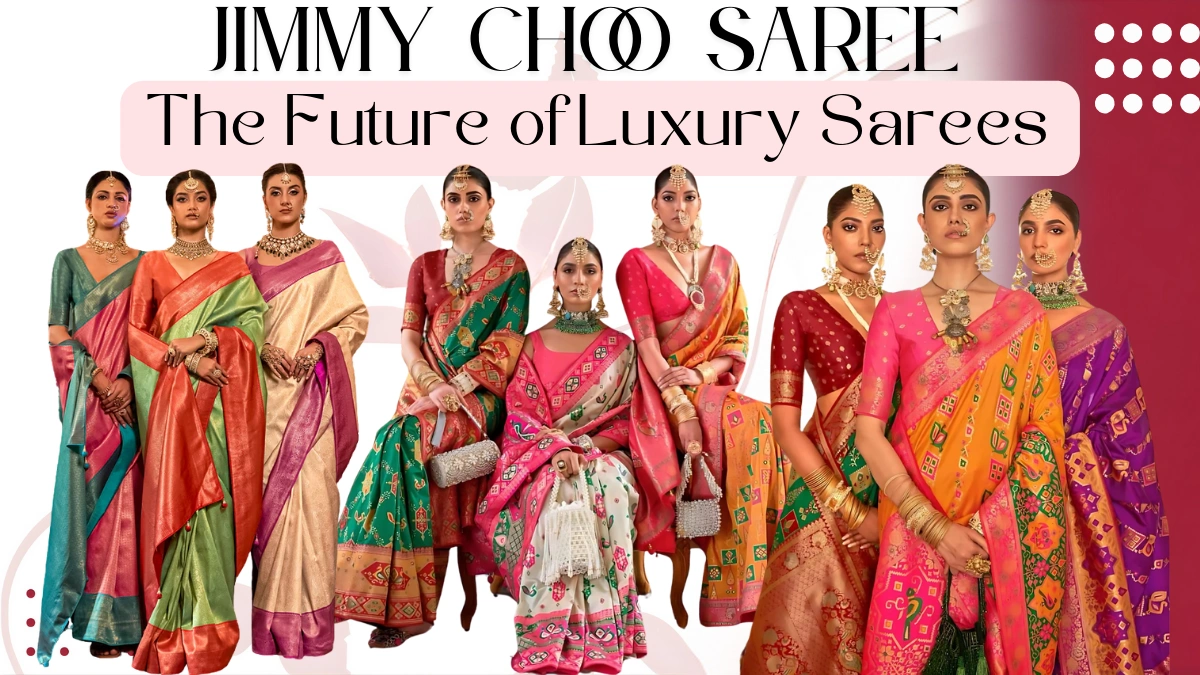
The Jimmy Choo Saree trend transformed the Indian luxury saree market by shifting consumer preference away from heavy, traditional designs toward modern, lightweight, glossy satin drapes. As the trend spread nationwide, interest surged around themes like luxury saree trends, satin saree 2026, modern Indian saree designs, and minimal saree fashion. This shift marked the beginning of a new era where comfort, simplicity, and contemporary aesthetics matter more than weight and dense embroidery. As the Jimmy Choo Saree becomes part of mainstream fashion, the next phase of luxury sarees in India is already emerging. Designers, boutiques, and fashion houses are preparing for a future defined by sustainability, personalization, advanced fabrics, and global design influences.
How the Jimmy Choo Saree Trend Reshaped Luxury Fashion
The trend redefined what luxury means in Indian fashion. Instead of ornate borders and heavy handwork, buyers gravitated toward satin textures, glossy finishes, pastel shades, and clean draping styles. Lightweight sarees began replacing traditional heavy silks, while neutral and pastel colours gained popularity. Social media played a major role in influencing colour and fabric choices, especially among younger buyers who preferred minimal glamour over traditional richness. Ready-to-wear and pre-draped sarees also gained acceptance, setting the tone for future innovation.
Rise of Sustainable Luxury Sarees
Search interest for eco-friendly sarees, organic satin, vegan silk, and sustainable fashion in India is steadily increasing. Sustainability is expected to become a defining pillar of luxury sarees. Designers are exploring organic satin alternatives, bamboo silk, Tencel and lyocell blends, recycled polyester satin, Ahimsa silk, and plant-based natural dyes. The new-age consumer wants sarees that feel premium while also being environmentally responsible.
Adoption of Tech-Enhanced Saree Fabrics
India is gradually entering the smart fashion space. Growing curiosity around smart clothing, LED sarees, digital shimmer, and adaptive textiles suggests future integration of colour-changing fibres, temperature-regulating fabrics, motion-responsive detailing, and AI-developed draping patterns. Technology is likely to influence not only fabric performance but also how sarees are designed and styled.
Personalised and Custom Luxury Sarees
The demand for custom-made sarees, personalised blouse designs, and made-to-order luxury outfits continues to rise. Future luxury sarees will focus heavily on customization, offering tailored measurements, personalised pastel and metallic shades, custom blouse structures, and AI-based virtual draping and fit preview tools. Buyers increasingly want sarees that feel exclusive and reflect their individual style.
Global Fusion Influences in Saree Design
Modern saree buyers appreciate a blend of Indian silhouettes with global fashion elements. Designers are expected to experiment more with satin-silk fusion sarees, cape-style blouses, gown-inspired pallu structures, minimal Western colour blocking, and red-carpet-influenced drapes. This fusion approach, popularised by the Jimmy Choo trend, will continue evolving in the years ahead.

New Luxury Colour Forecast
After the dominance of champagne gold, mint green, rose pink, silver, and lilac, search patterns now indicate rising interest in shades such as lavender grey, metallic ivory, pearl gold, frost blue, soft graphite, mocha beige, and sea-mist green. These subtle, globally inspired colours are set to define the next generation of luxury sarees.
Light Embellishments with Rich Finishes
Heavy embroidery is steadily giving way to refined surface detailing. Interest in minimal embroidered sarees and soft shimmer finishes confirms this shift. Future luxury sarees will focus on micro sequins, soft metallic sheens, fine-thread borders, delicate shimmer overlays, and precision-finished hems. Elegance will come from texture and finish rather than weight.
Ready-to-Wear and Easy-Drape Luxury Sarees
Searches for pre-draped sarees, ready-to-wear satin sarees, and modern draping styles continue to grow. Convenience is becoming essential in luxury fashion. Designers are expected to introduce premium pre-draped versions, adjustable pleat-locking systems, lightweight fluid fabrics, and structured shoulder drapes that maintain elegance while reducing effort.

Market Evolution After the Jimmy Choo Trend
The Jimmy Choo Saree trend reshaped the business side of luxury sarees as well. Boutiques now experiment more freely with glossy fabrics, satin is viewed as a premium choice by younger buyers, and fast-fashion brands have launched dedicated satin saree collections. Influencer-led styling has become a major driver of demand, and minimal luxury aesthetics are now widely accepted.
The Future Luxury Saree Buyer Profile
Search behaviour shows that future luxury saree buyers prefer designs that are lightweight, easy to drape, social-media friendly, modern yet culturally rooted, sustainable, comfortable for long events, and versatile enough for multiple occasions. These preferences are guiding how upcoming luxury collections are conceptualised.
Conclusion
The future of luxury sarees in India will be shaped by sustainability, global styling, technological innovation, lightweight fabrics, and personalised design. The Jimmy Choo Saree trend opened the door to modern luxury by making glossy pastels and minimal drapes the new standard. As consumer expectations continue to evolve, Indian fashion houses are set to create sarees that balance tradition with innovation, offering refined, forward-looking designs for the next generation. The post–Jimmy Choo era of luxury sarees promises to be more experimental, sustainable, and fashion-forward than ever before.

Disclaimer: The Jimmy Choo Saree trend is fashion-inspired and not associated with the Jimmy Choo brand. This article is based on observed search patterns, industry movements, and consumer behaviour analysis.